Bridging the Gap Between Learning and Doing
Every educator knows the challenge: how do you move students from understanding a concept to applying it in real life?
Lectures and textbooks build knowledge, but they rarely capture the unpredictability or complexity of real-world decision-making. Students need a space to apply what they’ve learned, take risks, and reflect—without real-world consequences.
That’s exactly where AI-powered simulations come in.
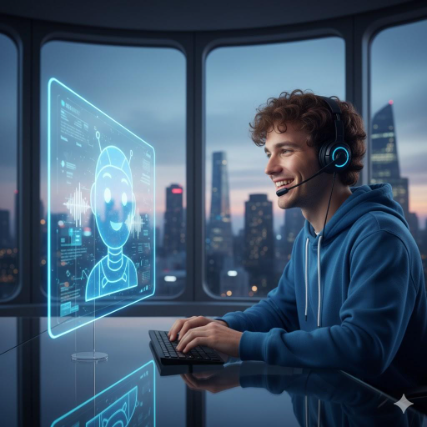
By integrating generative AI chatbots into role-play scenarios, educators can create immersive, authentic learning experiences. Whether it’s a healthcare consultation, a business negotiation, or a parent–teacher conference, these simulations bring real-world challenges directly into the classroom.
How AI Chatbot Simulations Work
AI simulations are interactive role-play activities powered by natural language models. The instructor defines the chatbot’s persona, objectives, and tone, while the student drives the conversation.
Example Scenarios
- Healthcare: A nursing student interviews a patient presenting with confusing symptoms.
- Business: A marketing student pitches a new campaign to a skeptical client.
- Education: A teacher-in-training negotiates classroom policies with a resistant parent.
Because chatbots respond dynamically—asking questions, probing, or even disagreeing—students must think critically and adapt. The simulation becomes a living conversation, not a scripted exchange.

Why Role Play Still Matters in the Age of AI
Role play has long been a cornerstone of experiential learning. The difference now is that AI makes it scalable, consistent, and deeply engaging.
Traditional role plays often depend on classmates or instructors, leading to varying levels of quality and realism. With AI chatbots, every student receives a consistent experience while still enjoying spontaneity and unpredictability.
Students frequently report that these simulations are among the most engaging parts of their coursework. They value how theory becomes tangible in real-time—and appreciate the ability to fail safely. Mistakes become opportunities for reflection and growth.
Designing Effective AI Simulations
To make the most of chatbot simulations, educators should focus on three key principles:
- Clarity of Objective – Tie every scenario directly to a course learning goal or competency.
- Authenticity of Role – The chatbot’s behavior should mirror real-world dynamics. Avoid overly scripted or polite exchanges.
- Structured Reflection – Include a debrief through journaling, discussion boards, or group dialogue to solidify learning.
Pro Tip: Encourage students to repeat the same simulation multiple times using different approaches. The reflection that follows each attempt deepens insight and builds confidence.
Example: AI in Healthcare Education
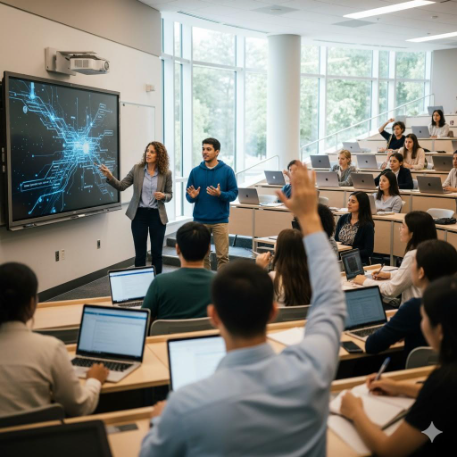
Picture a healthcare administration course. Students take on the role of hospital executives preparing for a potential merger. Their mission? Convince a skeptical chatbot board member who challenges them with financial, ethical, and operational questions.
Over ten minutes, the simulation unfolds dynamically. Students must build arguments, respond to tough questions, and manage emotional tone—all in real time.
When it’s over, the true value emerges in reflection:
- Which arguments were persuasive?
- What communication styles worked best?
- What would they change next time?
This structured self-assessment turns an interactive exercise into a transformative learning experience.
Internal link idea: Explore how UDM students are using AI for leadership development →
Takeaway for Educators
AI simulations aren’t a novelty—they’re a bridge between theory and real-world readiness.
By integrating these tools into the curriculum, educators can:
- Strengthen student communication and leadership skills
- Encourage adaptability and professional reasoning
- Create inclusive, reflective learning environments
When designed with intention, chatbot role plays help students practice not just what to think—but how to think.
Final Thoughts
Artificial intelligence isn’t replacing educators—it’s expanding what’s possible in the classroom. Chatbot simulations turn abstract lessons into lived experiences where students can experiment, reflect, and grow in real time.
As one student put it after a recent simulation:
“It felt real. And because I could mess up without judgment, I actually learned how I’d handle it next time.”
That’s the power of AI when it’s used not just to teach—but to transform learning.
Media & Press: For media inquiries or interviews, please contact the CAI Communications Team via the Contact Page.