CAI | Center for Augmenting Intelligence in Urban Health
Menu
Detroit AI Health Equity Collaborative
DAIHEC Purpose & Mission
About the DAIHEC
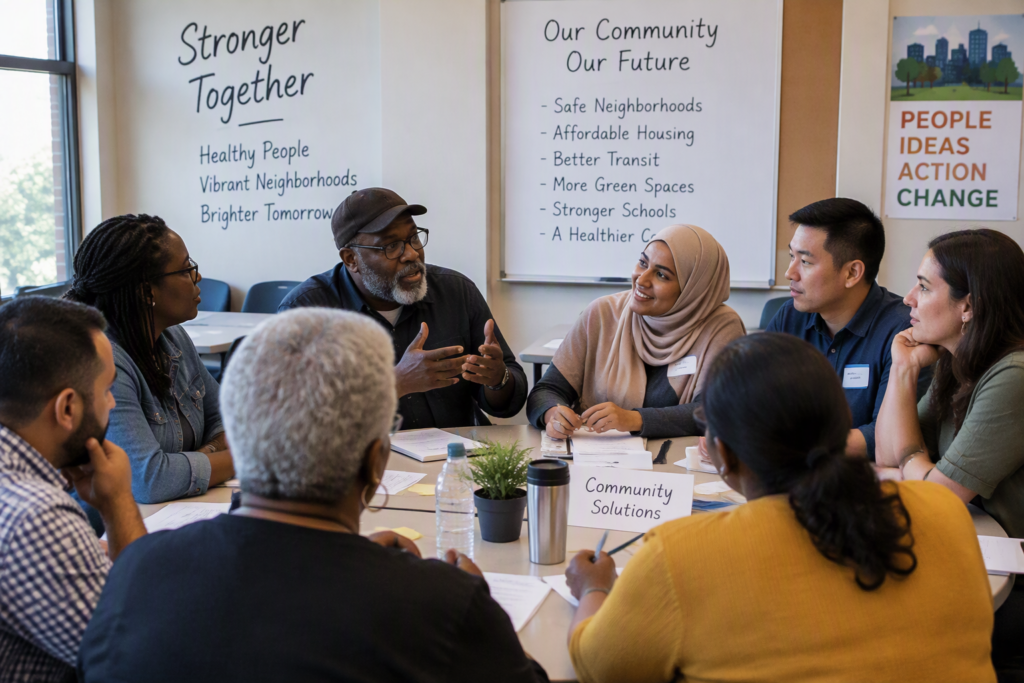
The Detroit AI Health Equity Collaborative (DAIHEC) brings Detroit community organizations, residents and the University of Detroit Mercy together to decide how AI tools are designed and used in community health and family services. Partners identify real community needs, build each AI tool once, and share it so any member organization can offer it to the people it serves. The Center for Augmenting Intelligence in Urban Health (CAI) at University of Detroit Mercy serves as the backbone organization, working with the Michigan Roundtable for Just Communities. The work is supported by the Michigan Health Endowment Fund.
Making sure artificial intelligence is used to close health gaps in Detroit — not widen them.
Residents and organizations interested in joining a working group, or in proposing a community need, can connect through the DAIHEC website (daihec.org).
Mission
AI is already shaping health care, benefits, hiring and everyday services. DAIHEC exists so that the Detroit residents most affected by these tools help decide how they are built and used, and so that community organizations can use AI safely and affordably to reduce health inequities.
What the Collaborative is:
DAIHEC is a capacity-building collaborative, not a new direct-service program. Together, partners are building:
Shared governance and clear decision rights, with residents at the table
Common data, privacy and safety standards (community-defined guardrails)
Practical AI literacy and training for residents and frontline staff
A shared way to evaluate whether tools actually help
How it works:
AI is treated as a shared utility: built once, shared many times. A community need is raised, one tool is designed to meet it, and any member organization can switch the tool on and offer it under its own name. The tools run on a model-independent platform, so the Collaborative is not tied to any single provider and costs stay stable over time.
Every tool follows the same eight steps: Need → Use Case → Guardrails → Co-Design → Test → Evaluate → Deploy → Learn
Who benefits:
Detroit residents and families who face the greatest barriers to health and services, and the community health workers, family-support staff, navigators and other frontline staff who support them.
Our Principles:
Community first
A human in the loop for every decision that matters
Our founding partners set the vision, coordinate the work and hold the Collaborative accountable for the long term. Additional strategic partners and collaboration members are being invited to fill specific community gaps.
Backbone organization
Responsibilities: coordination, research, evaluation and technical design
Anchor Partner
Responsibilities: racial equity and community engagement
Anchor Partner
Responsibilities: immigrant and refugee communities
Anchor Community Partner
Responsibilities: neighborhood family hubs
Partner
Responsibilities: technology infrastructure
Partner
Responsibilities: technology and training contributor